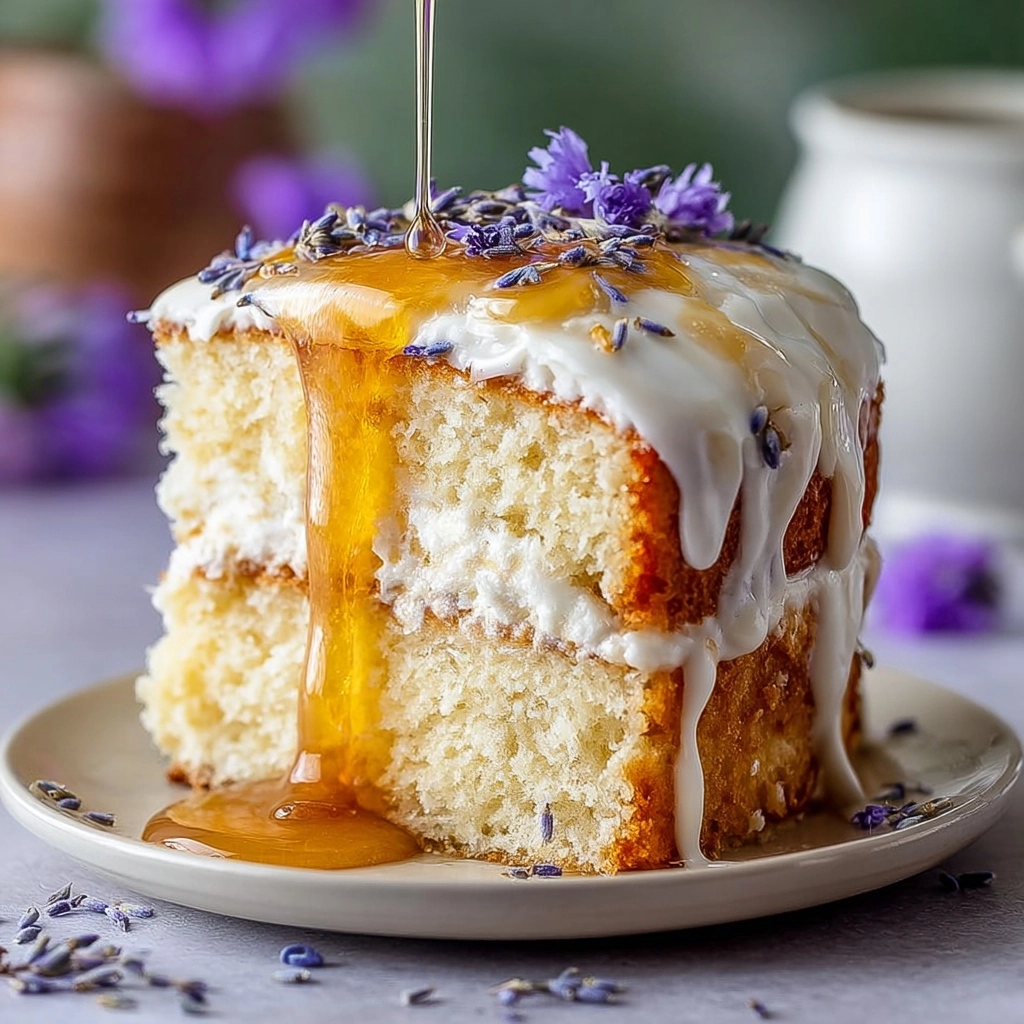
Indulge in a slice of heaven with this Lavender Honey Cloud Cake, where delicate floral notes and sweet honey harmoniously dance on your palate, creating a truly ethereal dessert experience. This cake has become my secret show-stopper for spring Sundays and special celebrations alike. With its pillowy texture and dreamy topping, Lavender Honey Cloud Cake is perfect for those who want something unique yet approachable, enchanting guests and brightening any gathering with its gentle aroma and flavor.
Ingredients You’ll Need
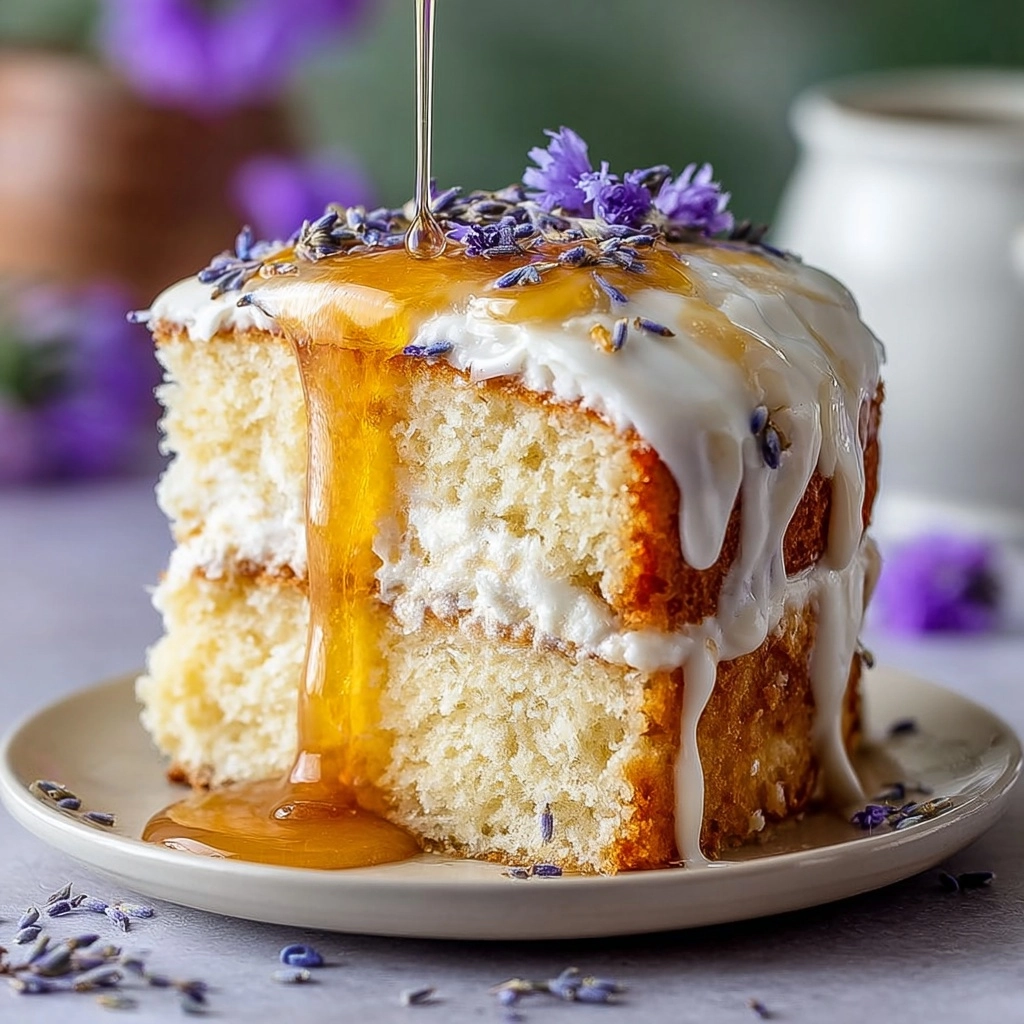
You’ll be delighted by how a handful of everyday ingredients, with a hint of elegant lavender and golden honey, can transform into the beautiful Lavender Honey Cloud Cake. Each element plays a vital role, from the buttery crumb to the floral-infused honey topping, resulting in a cake that’s as lovely as it is irresistible.
- All-purpose flour: The backbone of the cake, giving it structure for that perfect, tender crumb.
- Granulated sugar: Provides sweetness and helps ensure the cake stays moist and light.
- Baking powder: Gives your cake a gentle lift for a fluffy, cloud-like rise.
- Baking soda: Works with the baking powder to ensure a balanced, soft texture.
- Salt: Enhances the vanilla and honey notes while balancing sweetness.
- Unsalted butter, softened: Adds rich flavor and ensures a tender, moist cake.
- Large eggs: Bring structure and richness, holding the crumb together.
- Vanilla extract: Adds a warm background note that complements the lavender beautifully.
- Culinary lavender, finely chopped: The floral hero—use only culinary lavender for the best, most gentle flavor.
- Honey: Brings sweetness with a soothing floral undertone—local honey is especially lovely here!
- Whole milk: Keeps the crumb extra soft and helps meld all the flavors together.
- Heavy whipping cream: The cloud-like, creamy topping that makes this cake truly live up to its name.
How to Make Lavender Honey Cloud Cake
Step 1: Prep Your Pan and Gather Ingredients
Before anything else, preheat your oven to 350°F (175°C) and grease a 9-inch round cake pan. This ensures your beautiful Lavender Honey Cloud Cake won’t stick, and sets you up for stress-free cake extraction later. Getting your ingredients prepped and ready gives you a smooth, simple baking experience.
Step 2: Mix the Dry Ingredients
In a large mixing bowl, whisk together the flour, granulated sugar, baking powder, baking soda, and salt. Whisking means no pesky lumps, and you get an even distribution of leaveners and salt for a perfect, fluffy bite every time.
Step 3: Cream the Butter and Add Flavors
In another bowl, beat the softened butter until it’s creamy and a bit fluffy—it’s worth taking your time here. Then, add the eggs one at a time, mixing well after each. Stir in the vanilla extract and half of the chopped lavender for a gentle infusion of floral aroma. This step builds the foundation for your Lavender Honey Cloud Cake’s flavor profile.
Step 4: Combine Wet and Dry Ingredients
Gradually add your dry mixture to the wet, alternating with the milk—beginning and ending with the flour mix. Gentle mixing keeps the batter light and prevents overworking the gluten, resulting in that craveable soft crumb.
Step 5: Bake the Cake
Pour the finished batter into your prepared cake pan, smoothing the top. Slide it into the oven and bake for 25-30 minutes. You’ll know it’s done when a toothpick inserted in the center comes out clean. Let the Lavender Honey Cloud Cake cool in the pan for about 10 minutes before turning it out onto a wire rack to cool completely—it’s worth the wait!
Step 6: Infuse the Honey
While your cake is baking, gently warm the honey in a small saucepan and stir in the remaining lavender. As it cools, the flavors mingle, creating an unforgettable, aromatic drizzle for both the cream and the cake.
Step 7: Whip the Cloud Topping
Once your cake is fully cool, whip the heavy cream until soft peaks form. Drizzle in about 2 tablespoons of the lavender-infused honey and keep whipping until you get beautiful, stiff peaks. This luscious cream is genuinely the crowning glory of your Lavender Honey Cloud Cake!
Step 8: Assemble and Drizzle
Spread the lavender honey cream generously over the cooled cake. Finish with an artistic drizzle of the remaining infused honey—every swirl adds character, flavor, and a bit of shine.
How to Serve Lavender Honey Cloud Cake
Garnishes
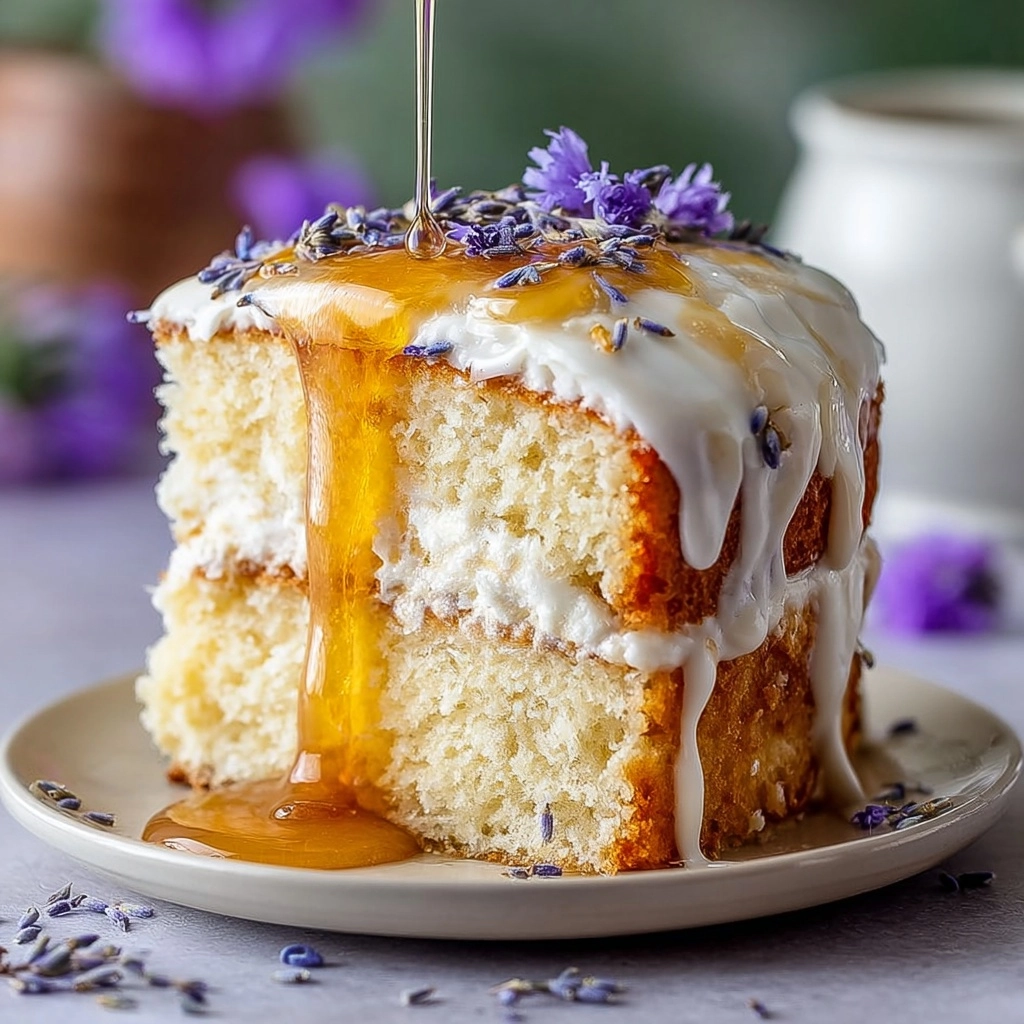
When it comes to garnish, a few extra lavender buds or a sprinkle of edible dried flowers turn this dessert into a centerpiece. A light dusting of powdered sugar or a handful of fresh berries adds color without overpowering the delicate flavors of the Lavender Honey Cloud Cake.
Side Dishes
This cake pairs beautifully with a cup of floral tea—think Earl Grey, chamomile, or even a cool glass of sparkling lemonade. For a delightful brunch, serve alongside fresh fruit salad or lightly toasted almonds to contrast with the cake’s silky crumb.
Creative Ways to Present
For special occasions, consider baking miniature versions in ramekins or a muffin tin—individual Lavender Honey Cloud Cakes make charming gifts. You could also serve the cake in petite slices with piped cream for an afternoon tea, or as a dreamy wedding shower dessert centerpiece.
Make Ahead and Storage
Storing Leftovers
If you’re lucky enough to have some Lavender Honey Cloud Cake left, store it covered in the refrigerator. The whipped cream topping stays gorgeous and the flavors continue to infuse, making every next-day bite a treat. Just make sure the cake is well covered to prevent it from absorbing other fridge odors.
Freezing
To freeze, I recommend wrapping just the cake (without cream or honey drizzle) tightly in plastic wrap, then aluminum foil, and storing for up to 2 months. Thaw at room temperature before topping with freshly whipped cream and honey, so every slice tastes fresh and cloudlike.
Reheating
The Lavender Honey Cloud Cake is truly best served at room temperature. If you must reheat, gently warm individual slices in the microwave for just a few seconds, being careful not to melt the cream. A quick warm-up helps revive that just-baked softness—perfect for an impromptu treat!
FAQs
Can I use dried lavender instead of fresh?
Absolutely, but make sure it’s culinary-grade dried lavender to ensure a safe, delicious floral touch. Use a little less dried than fresh, since dried lavender is more potent. Always chop it finely to avoid chewy bits.
Is there a substitute for honey in the recipe?
You can substitute pure maple syrup or agave nectar if you’re out of honey or want a different twist. Just know it will slightly alter the flavor profile, making it less floral and more maple-y or neutral, but still delicious.
How do I make this cake gluten-free?
Swap the all-purpose flour for a good quality 1:1 gluten-free baking blend. The Lavender Honey Cloud Cake remains light and airy, and most guests won’t even notice the difference.
Can I make this cake ahead of time?
Absolutely! Bake the cake a day ahead, cool completely, and store tightly wrapped. Whip the cream and drizzle the honey just before serving to preserve that ultra-fresh, cloud-like texture of the topping.
What’s the best way to infuse honey with lavender?
Gently warm the honey and stir in the lavender, then let it sit and infuse off the heat for at least 10-15 minutes. The longer it sits, the deeper the floral flavor. Straining the honey is optional, but if you prefer a perfectly smooth finish, go ahead!
Final Thoughts
This Lavender Honey Cloud Cake is my go-to for wow-worthy occasions and those moments when you want a dessert that feels extra special. Try it once and you’ll see why it’s a favorite—its light crumb, dreamy cream, and sweet floral notes are truly unforgettable. I hope you’ll fall in love with every bite!