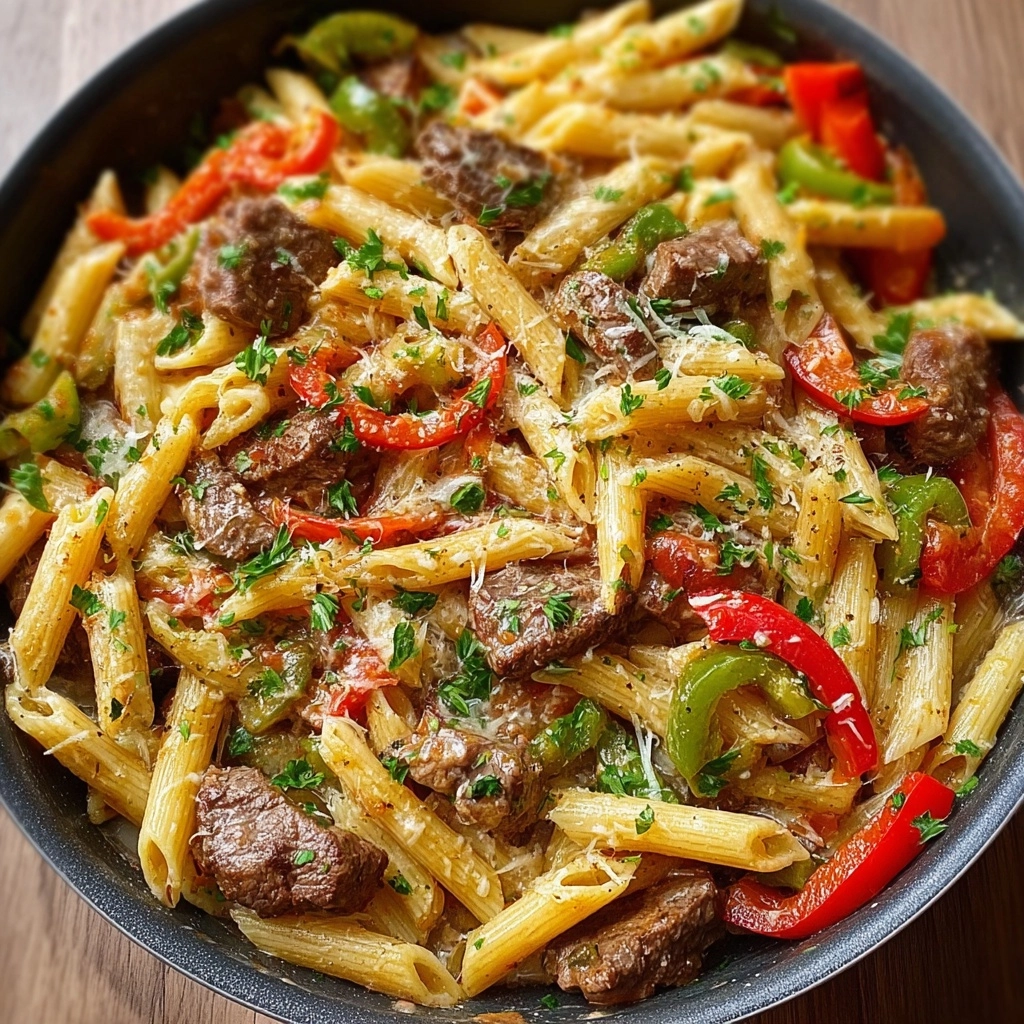
If you’re craving comfort food with a little Philly flare, look no further than this Philly Cheesesteak Pasta. It delivers everything you love about the classic sandwich—tender beef, melty cheese, peppers, and onions—all tossed with pasta in a luscious, creamy sauce. It hits every note: hearty, cheesy, and impossibly satisfying. Plus, it comes together in just about half an hour, making it perfect for busy weeknights or when you want to impress without stress.
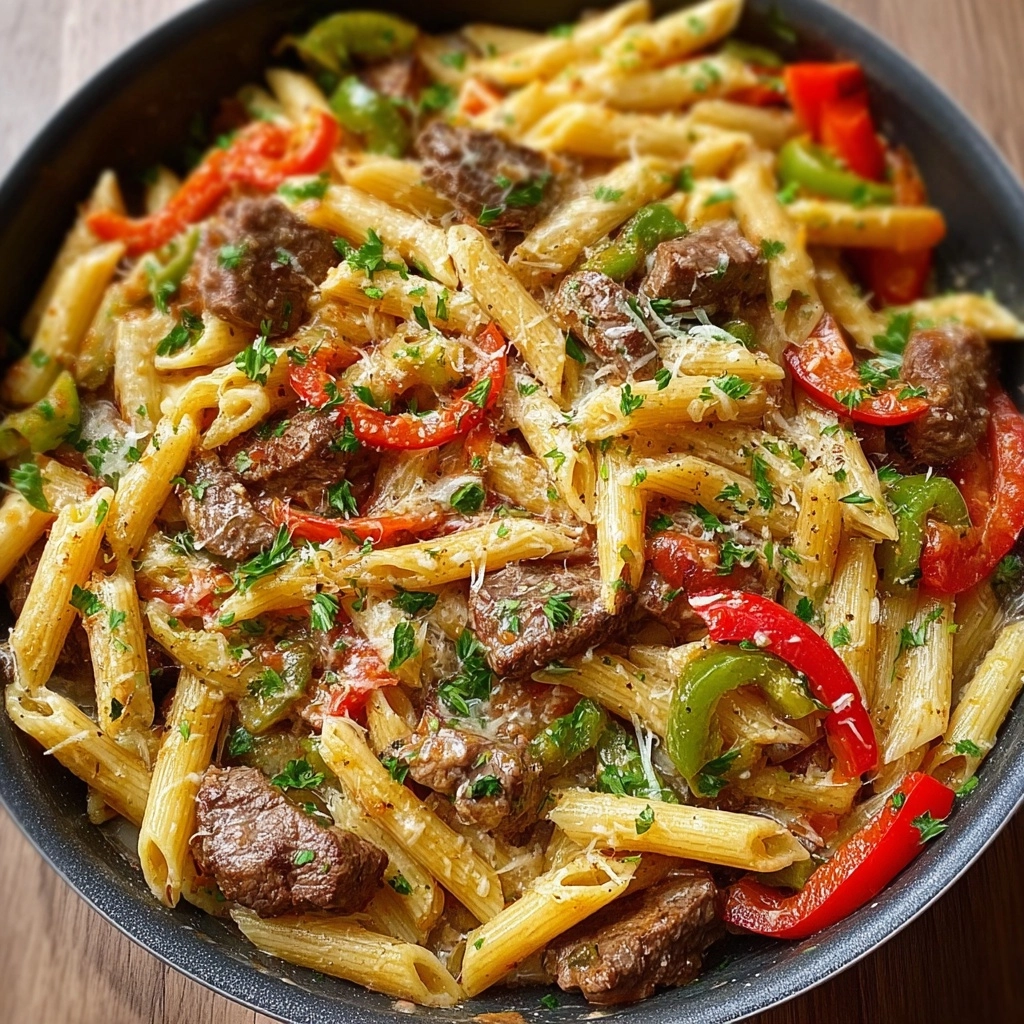
Ingredients You’ll Need
The ingredients list for Philly Cheesesteak Pasta is straightforward, but each element is key to recreating those classic flavors. Don’t be tempted to skip or substitute too much; each one adds to the authentic taste, creamy texture, or vibrant color that makes this dish a family favorite.
- Pasta: Penne or rigatoni are ideal choices, giving the sauce plenty of nooks to cling to for that creamy bite in every forkful.
- Beef Sirloin: Thinly sliced for quick cooking and ultimate tenderness, just like the best cheesesteak sandwiches.
- Olive Oil: Provides the perfect base for searing the beef and sautéing the vegetables, enhancing flavor in every step.
- Onion: Thin slices caramelize beautifully and amp up the savory sweetness.
- Green Bell Pepper: Adds a pop of color and a signature mild bite that’s essential to cheesesteak flavors.
- Red Bell Pepper: Balances the green pepper with a sweeter profile and deeper hue.
- Garlic: Just a couple cloves wake up all the flavors, infusing every bite with aromatic warmth.
- Beef Broth: Deepens the umami richness in the creamy sauce—don’t skip it!
- Heavy Cream: Brings the silkiness and richness to the sauce, ensuring a decadent finish.
- Worcestershire Sauce: A splash adds tang and savory complexity, echoing the flavors of an authentic cheesesteak.
- Provolone Cheese: Melty, mild, and crucial for that classic gooey cheesesteak texture.
- Mozzarella Cheese: Provides extra creaminess and a beautiful stretch factor in the final dish.
- Salt and Pepper: Season boldly to bring all the flavors into balance.
- Fresh Parsley: Chop and sprinkle for a pop of freshness and color right before serving.
How to Make Philly Cheesesteak Pasta
Step 1: Cook the Pasta
Start by cooking your pasta of choice—penne or rigatoni work best—in a big pot of salted, boiling water. Aim for al dente so it keeps its bite even after being swirled in the creamy sauce. Once done, drain and set aside, but make sure not to rinse; you want all those little bits of starch to help the sauce hug the pasta.
Step 2: Sear the Beef Sirloin
In a large skillet, heat up a tablespoon of olive oil over medium-high. Add the thinly sliced beef sirloin and let it sizzle. Stir occasionally, keeping an eye for any juices that might puddle—if they do, crank up the heat a touch. Cook until nicely browned and just cooked through, then scoop the beef onto a plate to rest. This seals in the flavor and keeps every piece tender.
Step 3: Sauté the Peppers and Onions
With the skillet still hot, add your second tablespoon of olive oil. Toss in the onion, green bell pepper, and red bell pepper. Sauté for about 5 to 7 minutes, stirring occasionally, until they’re soft, aromatic, and just starting to caramelize. The magic is in letting the veggies get a little golden, which adds depth and sweetness.
Step 4: Add Garlic
Next comes the garlic—freshly minced is best. Toss it in and cook for about 1 to 2 minutes, just until fragrant. Be careful not to let it burn; you’re aiming for that perfect point when it fills your kitchen with its wonderful aroma.
Step 5: Build the Sauce
Pour in the beef broth, heavy cream, and Worcestershire sauce. Stir everything together, scraping up any brown bits from the bottom of the skillet (flavor central!). Bring to a gentle simmer, letting the sauce thicken slightly and all the flavors meld.
Step 6: Combine Everything
Reduce the heat to low and return your cooked pasta and seared beef to the skillet. Toss gently to coat every piece with that gorgeous, creamy sauce. The pasta will soak up some of the goodness, making every bite rich and flavorful.
Step 7: Melt the Cheese
Sprinkle in the shredded provolone and mozzarella cheeses. Stir steadily as they melt, transforming the sauce into a luxuriously creamy blanket for the beef and veggies. If the mixture seems too thick, add a splash of pasta water or extra broth to loosen things up. Season to taste with salt and pepper, then get ready to serve!
How to Serve Philly Cheesesteak Pasta
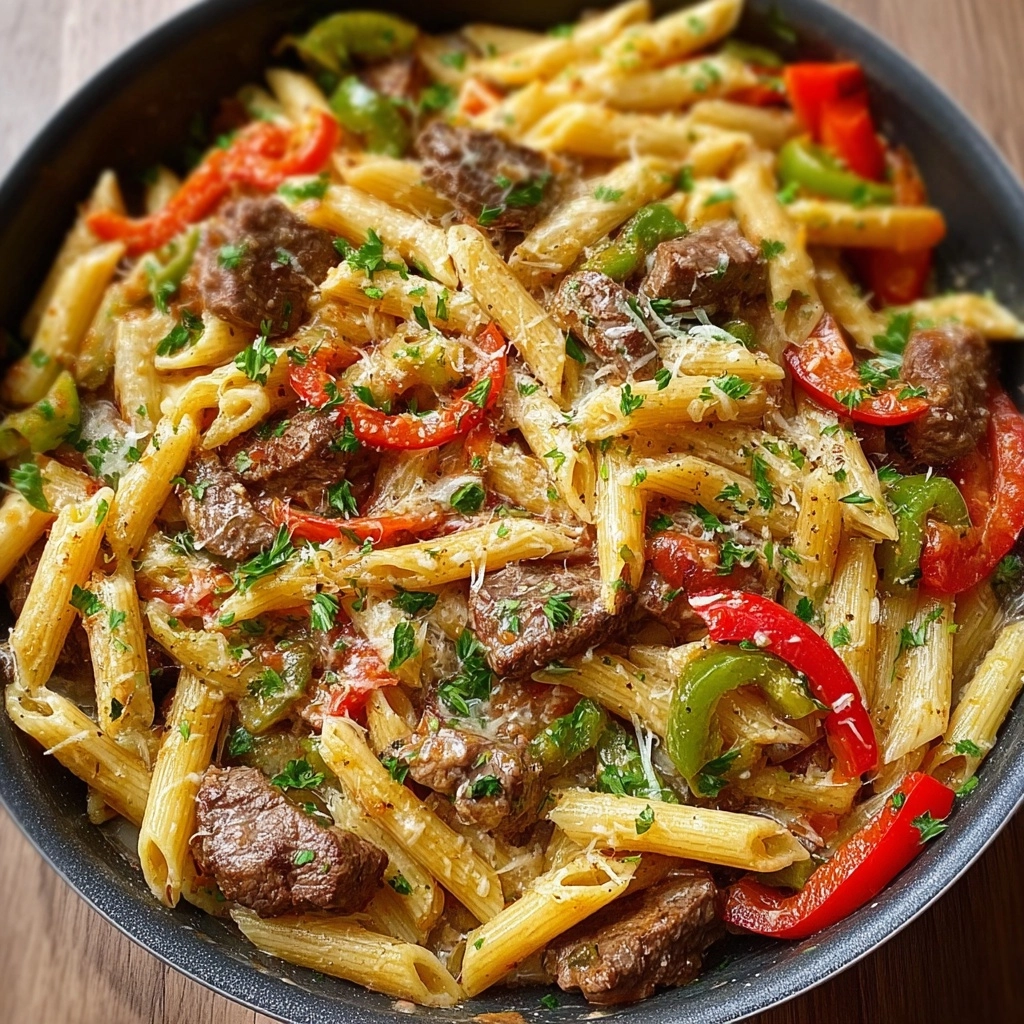
Garnishes
Don’t skip the garnish! A generous sprinkle of chopped fresh parsley adds a burst of color and that final pop of freshness. If you love a little kick, try a dash of crushed red pepper or a twist of black pepper on top just before serving to level up the flavor of your Philly Cheesesteak Pasta.
Side Dishes
This dish is rich and hearty, so a simple salad with crisp greens and a zingy vinaigrette is the perfect match. Think classic Caesar salad or even a crunchy Italian chopped salad. For a cozy dinner, pair it with garlic bread or a slice of crusty sourdough to mop up any leftover sauce.
Creative Ways to Present
For a fun twist, try serving Philly Cheesesteak Pasta in mini cast iron skillets or ramekins at your next get-together. You can also top each portion with extra cheese, pop under the broiler until bubbly, and let every guest dig into a bubbling, golden-topped masterpiece. Even a family-style serving platter garnished with parsley makes this dish impossible to resist.
Make Ahead and Storage
Storing Leftovers
If you’re lucky enough to have leftovers, Philly Cheesesteak Pasta keeps beautifully. Let the dish cool to room temperature, then scoop it into airtight containers. Store in the refrigerator for up to three days—just be sure to keep it covered to lock in moisture and flavor.
Freezing
This pasta can be frozen for up to two months, making it a great make-ahead option for busy weeks. Place cooled portions in freezer-safe containers or heavy-duty bags. When ready to eat, thaw overnight in the fridge for best results. Keep in mind that creamy sauces can sometimes separate a bit after freezing, but a good stir while reheating usually brings it back to life.
Reheating
To reheat, transfer your Philly Cheesesteak Pasta to a skillet and add a splash of cream, milk, or beef broth to loosen the sauce and prevent sticking. Warm over low to medium heat, stirring occasionally. You can also microwave single portions, stopping to stir every minute so the cheese melts evenly and everything heats through gently.
FAQs
Can I use a different cut of beef?
Absolutely! While sirloin is tender and flavorful, you can use ribeye, flank steak, or even pre-sliced “beef for stir fry” from the grocery store. Just be sure to slice thinly for that authentic Philly cheesesteak feel.
Is there a way to lighten up the sauce?
If you want a lighter version, you can substitute half-and-half for the heavy cream, or use whole milk. The sauce may be a bit less rich, but it will still coat the pasta beautifully and taste delicious.
Can I make Philly Cheesesteak Pasta gluten-free?
Definitely! Swap out the pasta for your favorite gluten-free variety, and double-check that your Worcestershire sauce is gluten-free (some brands contain wheat). Everything else in the recipe is naturally gluten-free.
Which cheeses work best if I can’t find provolone?
If provolone isn’t available, white American cheese or even a mild cheddar can step in. You want a cheese that melts easily and has a smooth flavor—experiment to find your perfect combination!
Can Philly Cheesesteak Pasta be made vegetarian?
Yes. For a vegetarian take, swap the beef for sautéed mushrooms and use vegetable broth in place of beef broth. The mushrooms soak up all that savory sauce, making this dish just as comforting and delicious.
Final Thoughts
If you’re ready for the ultimate twist on a classic, Philly Cheesesteak Pasta will quickly become a favorite at your table. It’s warm, cheesy, and packed with flavor—just the kind of recipe that brings everyone together. Go ahead and give it a try—there’s something magical about combining two comfort food icons in one irresistible meal!